Sitting for long hours has quietly become one of the biggest health challenges of modern office life. Back pain, stiff neck, tight hips, poor posture, and mental fatigue are now common side effects of desk jobs.
The good news? You don’t need a gym, workout clothes, or even much space to stay active. These simple office-friendly exercises can be done discreetly while working and help keep your body energized throughout the day.
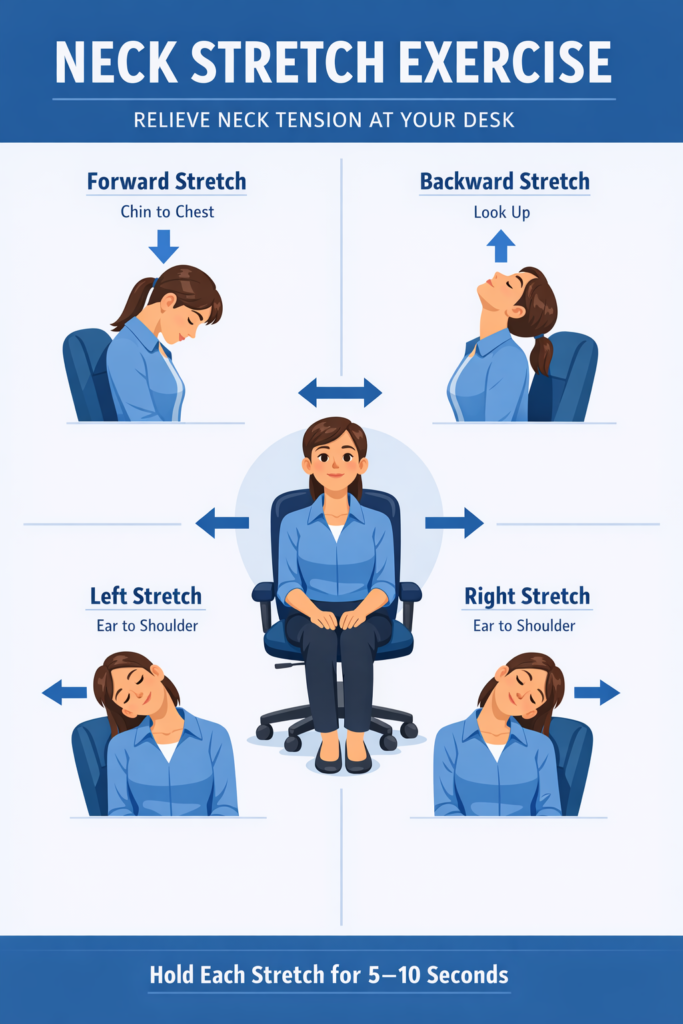
1. Neck Stretches
Gently tilt your head forward, backward, and side to side. Hold each position for 5–10 seconds.
Benefits: Relieves neck stiffness and reduces screen-related strain.
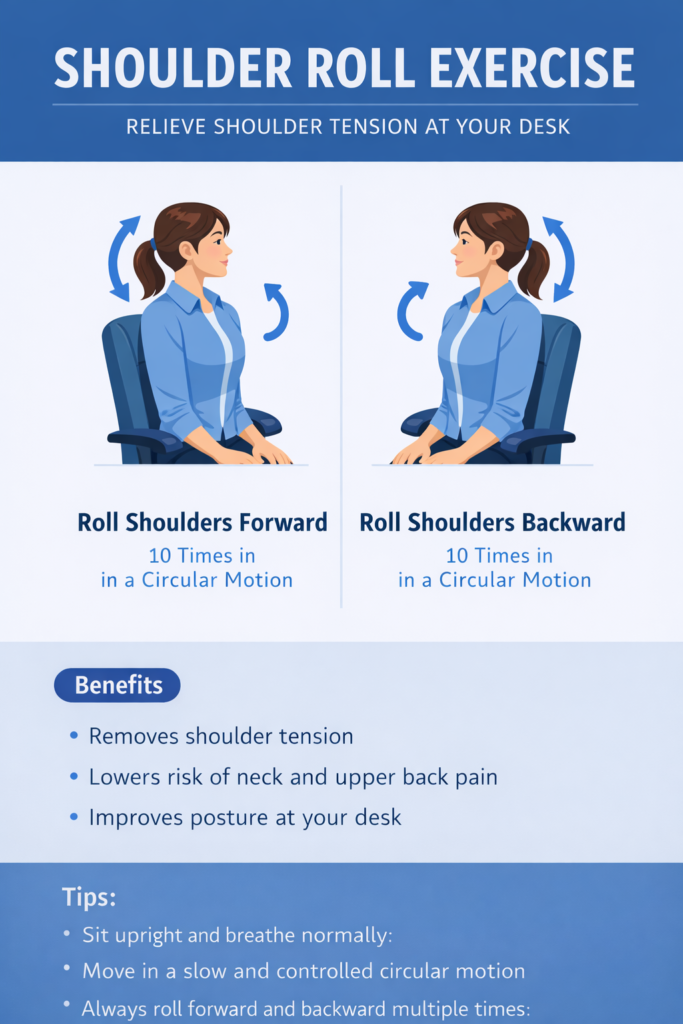
2. Shoulder Rolls
Roll your shoulders forward 10 times, then backward 10 times.
Benefits: Releases shoulder tension and improves posture.
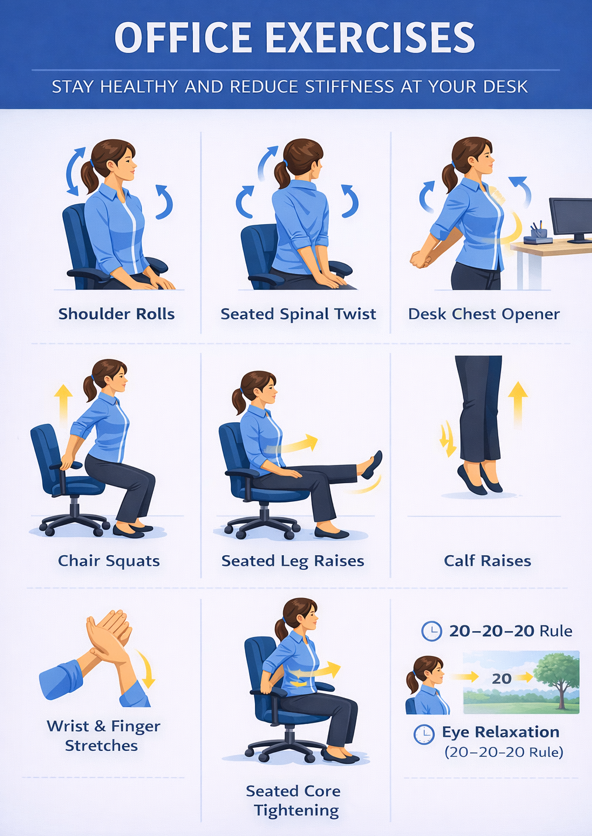
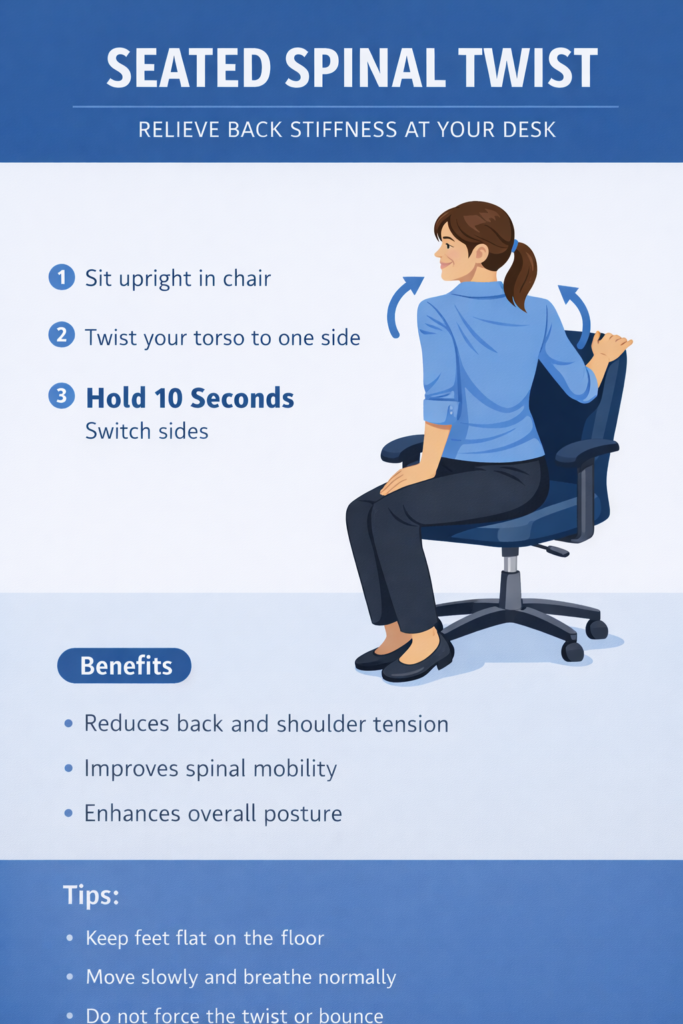
3. Seated Spinal Twist
Sit upright, place one hand on the back of your chair, and gently twist your torso. Hold for 10 seconds and switch sides.
Benefits: Improves spinal mobility and reduces lower back stiffness.
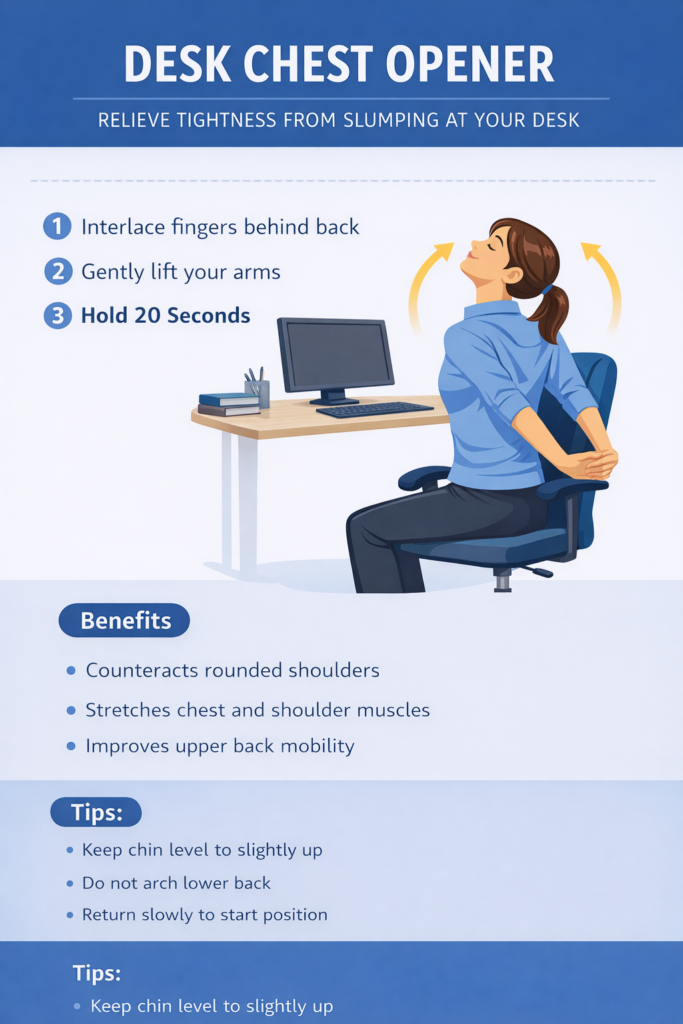
4. Desk Chest Opener
Interlace your fingers behind your back and gently lift your arms while opening your chest.
Benefits: Counteracts rounded shoulders caused by prolonged sitting.
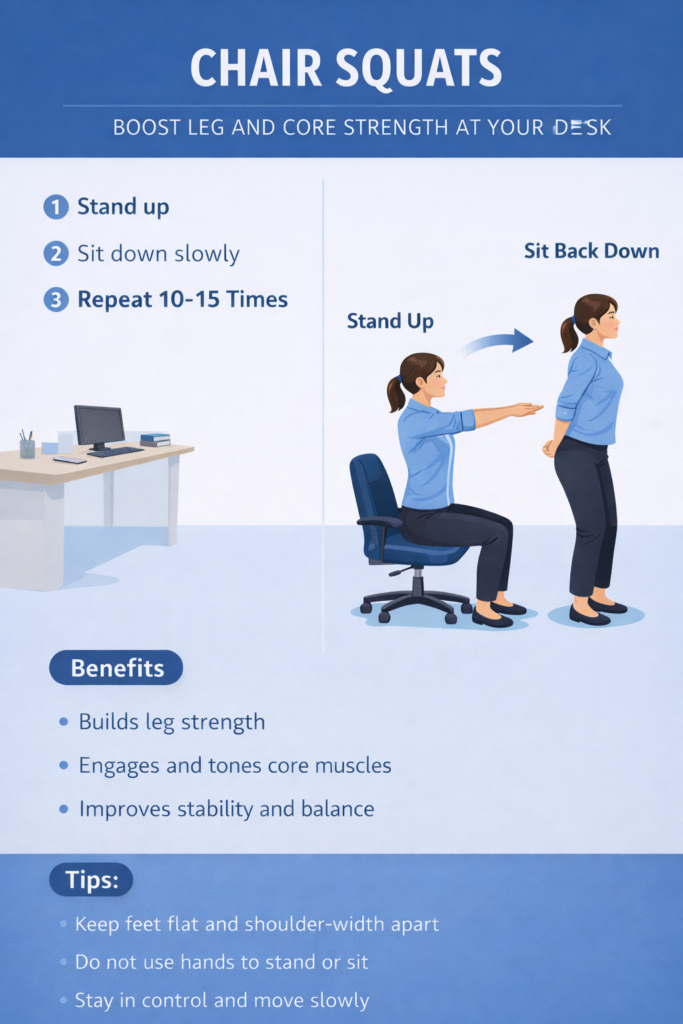
5. Chair Squats
Stand up from your chair without using your hands, then sit back down slowly. Repeat 10–15 times.
Benefits: Strengthens legs and activates core muscles.
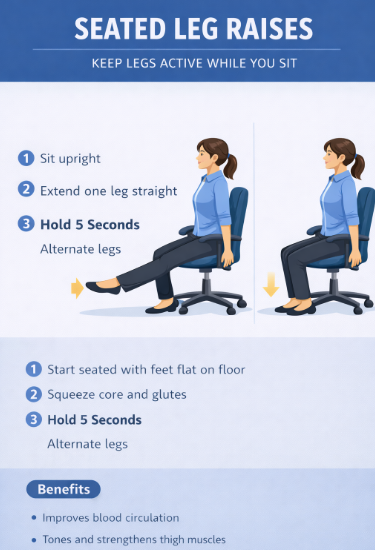
6. Seated Leg Raises
While seated, extend one leg straight and hold for 5 seconds. Alternate legs.
Benefits: Improves blood circulation and strengthens thigh muscles.
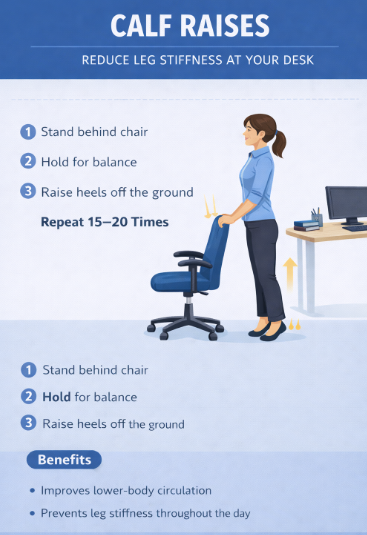
7. Calf Raises
Stand behind your chair, hold it for balance, and raise your heels off the ground. Repeat 15–20 times.
Benefits: Prevents leg stiffness and improves lower-body circulation.
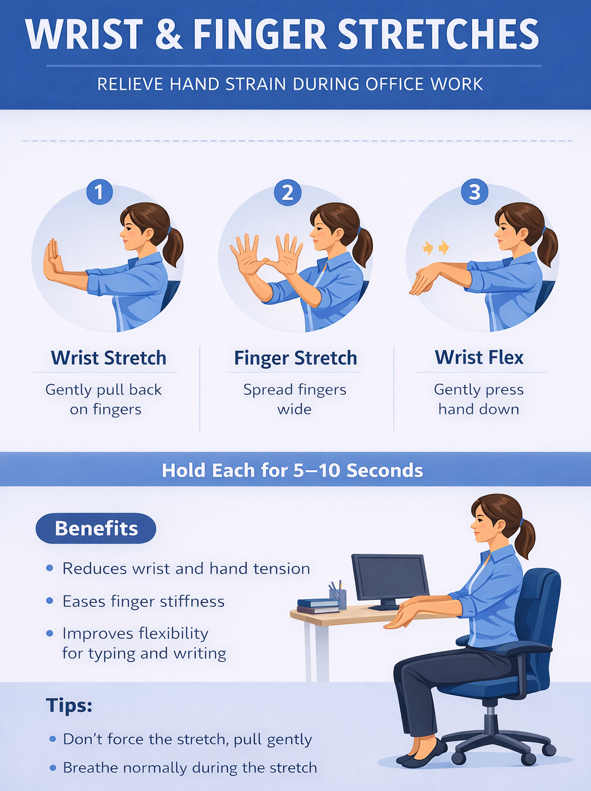
8. Wrist and Finger Stretches
Stretch your fingers wide, rotate your wrists, and gently pull back each hand.
Benefits: Reduces the risk of repetitive strain injuries from typing and mouse use.
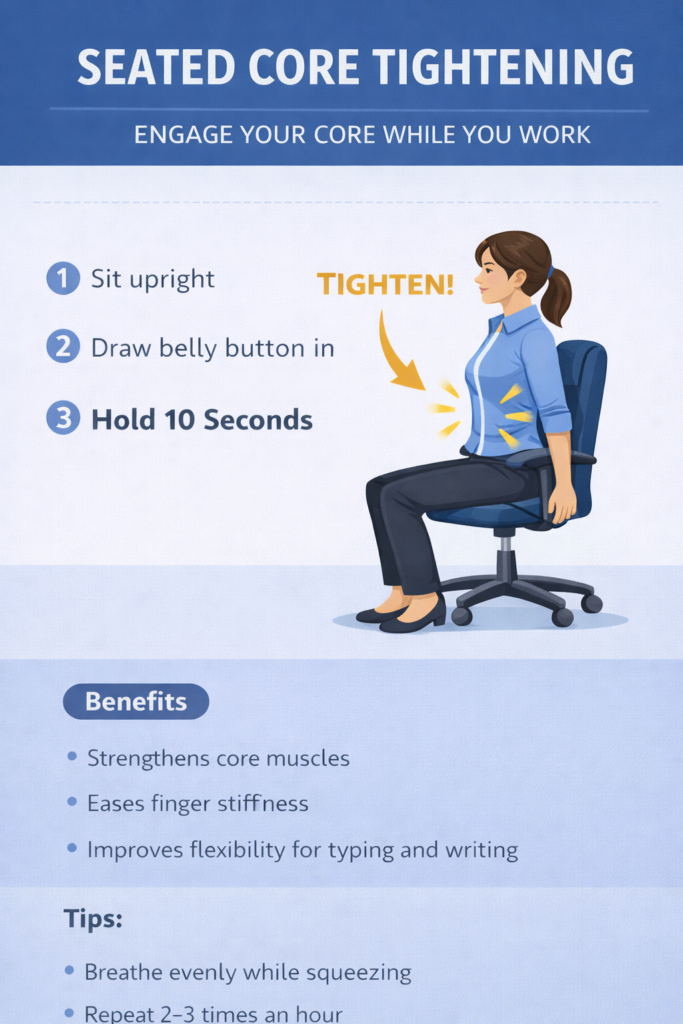
9. Seated Core Tightening
Sit upright and tighten your abdominal muscles for 10 seconds, then relax. Repeat 5–10 times.
Benefits: Activates core muscles and supports better posture.
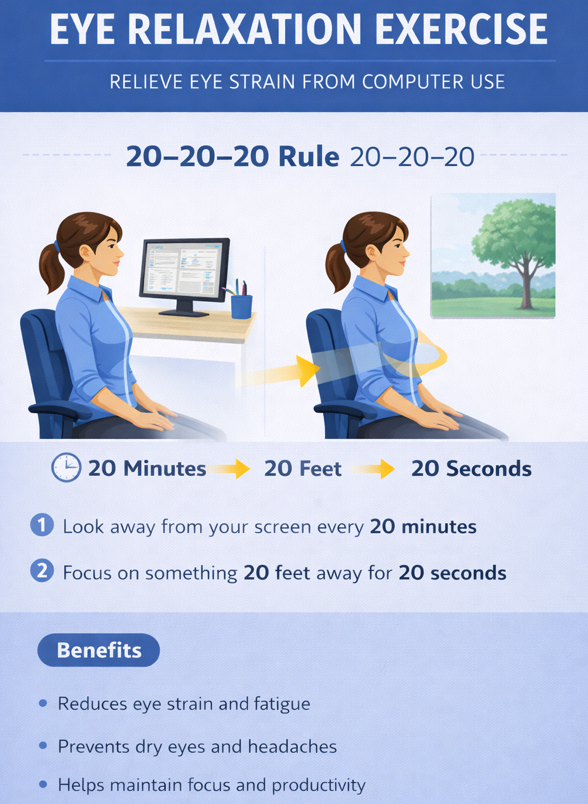
10. Eye Relaxation Exercise (20–20–20 Rule)
Every 20 minutes, look at something 20 feet away for 20 seconds.
Benefits: Reduces eye strain and mental fatigue.
How to Make Office Exercise a Habit
Set reminders every 60–90 minutes.
Do 2–3 exercises during short breaks.
Combine movement with calls or thinking time.
Focus on consistency rather than intensity.
Final Thoughts
Staying active at work doesn’t require dramatic lifestyle changes. These small movements, when practiced daily, can significantly improve posture, energy levels, focus, and overall well-being.
Your body isn’t designed to sit all day—so give it the movement it deserves, even at your desk.