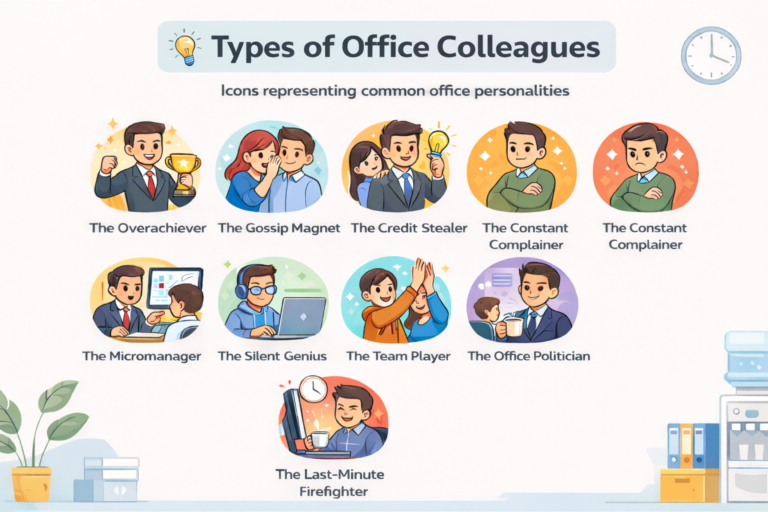
Employee engagement activities are designed to create a positive and connected workplace where employees feel valued and motivated. When employees interact and build relationships outside of daily work, it improves teamwork, communication, and overall morale. Simple gestures like providing free meals not only show appreciation but also give team members a chance to bond and share ideas.
Team-building activities and retreats help employees develop trust, enhance collaboration, and strengthen job satisfaction. Regular feedback tools, such as pulse surveys and suggestion boxes, allow employees to express their opinions and contribute ideas, making them feel heard and involved in company growth.
Investing in employees’ professional development, such as offering paid training or continuing education, boosts confidence, keeps skills updated, and enhances performance. Additionally, recognizing employees’ efforts through rewards like gift cards or spot awards reinforces motivation and appreciation.
Overall, these initiatives help build a culture of trust, respect, and belonging. When employees feel supported and acknowledged, they are more engaged, productive, and committed to achieving both personal and organizational goals.
So the Big question is how to improve the team’s engagement without forcing it But implementing it naturally. It is extremely important that the team must feel that they genuinely want to get involved in the team activity and it is not just a formality. This can be done various methods and the most effective of them are listed below.
1 . Create have a company newsletter.
A company newsletter is an effective tool to enhance employee engagement within the workplace. It helps strengthen relationships, encourage teamwork, and keep everyone updated on important news and achievements. By sharing company goals, values, and milestones, a newsletter reminds employees of the organisation’s mission and helps them feel more connected and motivated to contribute toward its success.
Although there are no fixed templates or formats for writing a complaint newsletter but you can still read the below resources to get an idea of how to create a proper company newsletter for your team.
- https://word.cloud.microsoft/create/en/newsletter-templates/?source=create_flow
- https://www.adobe.com/express/templates/newsletter
- https://venngage.com/templates/newsletters
- https://blog.hubspot.com/marketing/email-newsletter-templates
2 . Create an employee engagement committee.
Encouraging employee engagement committees is an effective way to enhance involvement and morale in the workplace. These committees organize various initiatives that make employees feel appreciated and connected to their roles. Activities may include team-building exercises, informal get-togethers, or recognition programs that celebrate employee achievements and strengthen team spirit.
The Key for choosing the right members for this engagement committee is to look for individuals who are Naturally creative in nature are also empathetic in nature. They will only be able to put their best effort if they care for their teammates and their well being. Again they should be research oriented so that they can look various team engagement methods and techniques which are applicable for their team and also they should know how to connect with people effortlessly so that they can actually implement all the team engagement ideas.
Again they should have good presentation skills and communication skills so that they are able to facilitate these events with ease. Again you need to make sure that this extra activities are not A burden to their daily activities and their normal business as usual activities should not be impacted.
In order to identify if the individual is the right fit for a team engagement team you can ask him/her 3 questions and if their answer is satisfactory then you can include them in the team.
Q1. Why do you want to become a member of the team engagement committee?
Q2. Do you have any experience in school, college or in you previous company in any team engagement activity?
Q3. How will you respond if the team does not respond positively, will you get cold feet or will you try to improvise and find a solution?
Once the team engagement committee is formed, you can then step up the game and add new features to the committee. You can add the following features to the Committee.
- Give the committee a catchy yet official name.
- Add a logo for the team engagement committee.
- Add a tag line for the team.
- Create a distribution list/mail specifically for the team for sending out birthday/anniversary/personal achievements mails.
3. Create a WhatsApp group for team members.
Method 1
This is a free yet very effective way to engage teams to connect outside of the workplace, it helps build teamwork and a sense of friendship. As a result, communication improves because everyone feels more relaxed and comfortable in their work environment.
Steps to create a WhatsApp group is given below.
Step 1. Create a tracker in an Excel sheet and gather everyone’s WhatsApp contact number.
Please find below a sample file that you can use.
Step 2. Create a new group in team by clicking on the “ellipsis” option.
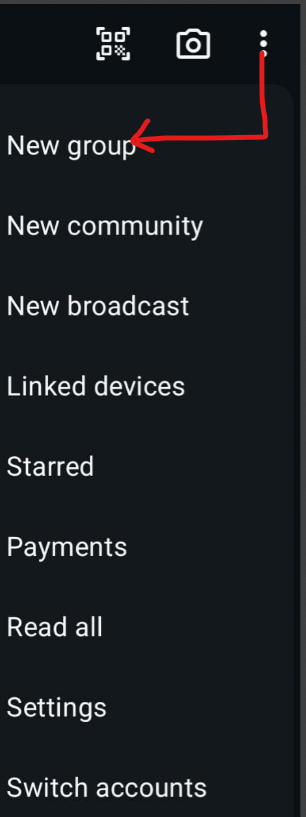
Step 3. You can add the team members one by one and see how much is pending in the Excel sheet as well.
Pros:
1. You have more control over who joins the team, as you will be adding members by yourself.
2. In case the group is deleted or you need to keep a backup of it, you don’t need to do the whole process again.
3. The team has visibility of who is in the group, and in case you need approvals for adding team members, you can get approvals in the Excel sheet.
Cons:
1. This is a bit time-consuming and tedious process.
Method 2:
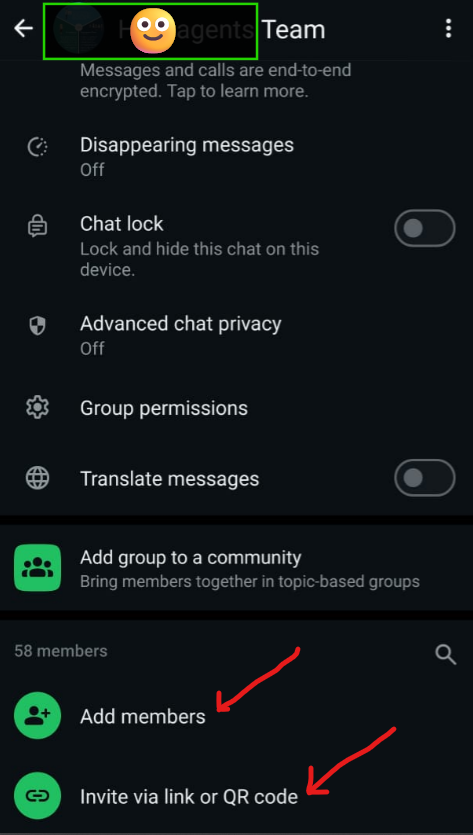
Once the group is created by following step 2 in the above method, then you can share the QR
in your company’s Zoom or Teams channel.
Steps to get the QR for the newly created group.
Pros:
1. This is quicker compared to the earlier method.
Cons:
1. There is a risk that the QR code can be shared with people outside the team during the team creation stage. Hence, once the team members have joined then it’s important to make sure that any unwanted guest have not joined the group.
4. Provide free meals or give meal coupons.
Who don’e like a free treat. Offering free meals is an excellent way to recognize and appreciate employees for their dedication and hard work. It serves as a meaningful reward and helps foster stronger team bonds. Shared meals create opportunities for employees to interact, develop social connections, and exchange ideas in a relaxed setting.

5. Have team building activities regularly.
Team-building activities play an important role in creating a positive and cooperative work culture. They encourage employees to trust one another, communicate more effectively, and work together toward common goals. These activities also help break down barriers between departments and promote a sense of unity across the organization.
Team-building retreats, in particular, provide a relaxed environment where employees can interact outside their usual work roles. Such experiences help people discover shared interests, understand each other’s strengths, and develop stronger professional relationships. As a result, teams often return to work with improved collaboration, higher motivation, and a renewed sense of belonging—leading to greater innovation and overall job satisfaction.
You can refer to our other post about the list of virtual and offline games that you can play with your team members.
1. Best Online/Virtual games for Fun Friday.
2. Best offline/in-person games for Fun Friday.
6. Add a suggestion box.
Providing employees with a platform to share their thoughts, such as a suggestion box, is an effective way to enhance engagement in the workplace. It helps employees feel acknowledged and respected, giving them a sense of ownership in the organisation’s growth. By encouraging them to share ideas, feedback, and creative solutions, the company can benefit from fresh perspectives and continuous improvement driven by its own people.
You can do this each financial quarter or each month to make sure that the opinions of the employees and the team members are heard and accounted for.
1. Define Purpose
Clarify the goal: collecting ideas, feedback, or concerns to improve the workplace.
Communicate the purpose to the team so everyone understands its value.
2.Choose a Format
Physical Box: A locked box placed in a common area with slips of paper and pens.
Digital Option: An online form, shared document, or dedicated email address for submissions.
3.Ensure Anonymity
Allow anonymous submissions to make employees feel safe sharing honest feedback.
Clearly state that all suggestions are welcome and will be taken seriously.
4.Promote Usage
Announce the suggestion box to the team through meetings, emails, or posters.
Encourage employees to contribute regularly and share the types of ideas sought.
5.Review and Act
Assign a small team or manager to review suggestions periodically.
Acknowledge received suggestions, implement feasible ideas, and provide feedback to the team.
6.Recognize Contributions
Consider recognizing or rewarding ideas that lead to positive changes.
Share outcomes with the team to encourage continued participation.
7. Offer paid courses and learning opportunities.
You can definetly keep the knowldge works and curious performers happy by giving them and opportunity to learn on company’s sponsership. Providing paid opportunities for continuing education and cources can greatly benefit employees and the organization. It not only boosts morale and job satisfaction but also helps employees stay current with the latest technologies and industry trends. This ongoing learning enhances their skills, improves job performance, and increases overall workplace productivity and efficiency.
8. Take feedback from employees regularly.
Taking regular employee feedback is an effective way to enhance workplace engagement. These allow employers and managers to gather valuable information which helps them in making better decisions and understand employees’ needs, concerns, and overall satisfaction of the team members.
9. Create a buddy for newly joined employees.
In this program, the new joiners are paired with experienced team members during onboarding, giving them guidance and support as they settle into their roles. This approach helps newcomers feel welcomed, confident, and connected to the team right from the start.
10.Create a culture of taking “stretch assignments”.
One of the best ways of improving team engagement is to create a culture of taking stretch assignments..Creating a culture that encourages stretch assignments in a company promotes continuous learning, innovation, and employee growth. When employees are given opportunities to take on challenging projects beyond their usual roles, they develop new skills, gain confidence, and become more engaged in their work.
Such a culture also helps identify future leaders and strengthens the overall talent pipeline. It fosters trust between management and employees, showing that the organization values development and is willing to invest in its people. Ultimately, a culture of stretch assignments drives higher performance, adaptability, and innovation—key qualities for long-term business success.
11. Keep options for employees to work in a hybrid environment.
Companies should offer options to work in a hybrid environment because it offers the best of both worlds: flexibility and team engagement. A hybrid setup gives employees the freedom to manage their work-life balance while still maintaining in-person connections and teamwork when needed.
It can lead to higher job satisfaction, improved productivity, and reduced burnout since employees can choose the environment where they work best. Additionally, it helps organizations attract and retain top talent, as many professionals now prefer flexible work options.
From a business perspective, hybrid work can also lower operational costs and increase employee engagement, ultimately contributing to a more motivated, efficient, and loyal workforce.
12. Have a casual Friday or theme based dress down day.
Introducing a theme-based dress-down day can lift employee spirits and strengthen team connections by creating a more relaxed and comfortable work environment. It also gives employees a chance to express their personal style, helping them feel more confident, comfortable, and empowered at work.
13. Have “walk and talk” sessions
Walk and talk sessions are one of the easiest and most effective ways of both improving team engagement as well as improving the overall mental and physical health of the employees. They merge physical activity and the natural environment with therapeutic practices, which can alleviate stress, enhance mood, and facilitate easier communication in a more relaxed setting. This method is advantageous for team engagement and also helps employees to open up to their colleagues, which results in better team bonding and improved productivity.
14. Conduct small events in regular intervals.
It is very beneficial to conduct small events in regular intervals of 2-3 months to keep the team motivated and do something apart from their daily activities. A few such examples are given below, but again, the list is not limited to this and depending upon the culture of the company and the nature of the employees, the managers can’t decide on more events which can help in improving the team engagement and bonding.
a. Random pics snapping competition.
b. Storytelling competition.
c. Writing competition.
d. Short films watching
e. Bring random objects into the office.
f.Potluck!!
15. Team events sponsored by the company.
This is a more advanced version of the small events, and it takes a longer period of time and a lot of people are involved in this. You can take out the whole team on outings and to different locations where they can relax and spend some happy time with their teammates.
16. Create a recognition program for employees
It is very important to have an employee recognition program that actually values the employee and recognises their hard work because it motivates employees, boosts morale, and reinforces positive behaviours. Recognising and appreciating employees’ efforts makes them feel valued, increases engagement, and encourages higher productivity.
It also helps retain top talent by creating a supportive and rewarding work environment, strengthens loyalty, and fosters a culture of appreciation. Overall, an effective recognition program contributes to a more motivated, committed, and high-performing workforce.
17. Offer flexible work timings for the employees
Offering flexible work hours allows employees to manage their schedules in a way that balances work and personal life more effectively. It can lead to increased productivity, higher job satisfaction, and reduced stress, as employees can work during their most productive times.
Flexible hours also make the organization more attractive to top talent, improve retention, and foster a culture of trust and autonomy, ultimately contributing to a more motivated and engaged workforce.
18. Have a company sharepoint side and viva Engage site or similar pages.
A company should have its own SharePoint and Viva Engage or dedicated team channel site because these platforms centralise communication, collaboration, and knowledge sharing within the organisation. SharePoint provides a secure space for storing, organising, and managing documents and resources, making it easier for employees to access the information they need.
Viva Engage, wikis or similar pages foster internal networking, engagement, and community building, allowing employees to share ideas, celebrate achievements, and stay connected across teams and departments. Together, these tools enhance productivity, streamline workflows, improve employee engagement, and create a more connected, informed, and collaborative workplace.
19. Professional development opportunities
There should be a plan that offers professional development opportunities to its employees because it helps them enhance their skills, stay current with industry trends, and perform their roles more effectively. These opportunities also prepare employees for future responsibilities, fostering career growth and internal mobility.
Offering professional development demonstrates that the organisation values its workforce, which boosts employee engagement, satisfaction, and retention. Additionally, a well-trained and continuously learning team drives innovation, productivity, and long-term business success.
This is not only beneficial for the employees but for the employer as well because eventually this is a good return on investment for the employer as well. Hence, this is not an expense but an investment from the employer’s point of view.
20. Provide a wellness program
A wellness program in a company offers numerous advantages for both employees and the organisation. It promotes healthy lifestyles, such as programs that help employees manage stress, prevent illness, and improve overall well-being, leading to reduced absenteeism and higher productivity. Healthy and energised employees are more focused, motivated, and efficient, which benefits organisational performance. Wellness initiatives also increase employee engagement by showing that the company values its workforce, boosting morale and job satisfaction.
Preventive health measures through these programs can lower healthcare costs while supporting mental and emotional well-being, creating a more balanced and resilient workforce. Additionally, wellness programs help attract and retain top talent, as employees increasingly prefer workplaces that prioritise health and work-life balance.
21. Provide mentoring and coaching
A mentoring and coaching program in a company offers numerous benefits that contribute to both employee growth and organisational success. By providing guidance, feedback, and support, these programs help employees enhance their skills, improve performance, and achieve their career goals more efficiently. Employees feel valued and supported, which boosts morale, job satisfaction, and engagement. Additionally, mentoring encourages knowledge sharing, allowing experienced staff to pass on their expertise and best practices to newer or less experienced employees.
Such programs also play a crucial role in leadership development by identifying and nurturing future leaders within the organization. They strengthen team collaboration and communication, as employees build stronger relationships through mentorship. Moreover, companies benefit from higher employee retention rates, as staff are more likely to stay in an environment that invests in their professional growth. Overall, mentoring and coaching programs create a culture of continuous learning and development that drives both individual and organisational success.
22. Have regular team meetings
Regular team meetings between management and employees and employees themselves are important because they not only ensure clear communication, alignment, and collaboration across the organisation but the team feels more valued and recognised. These meetings provide a platform for management to share updates, goals, and expectations, while employees can voice concerns, ask questions, and provide feedback. This two-way communication helps prevent misunderstandings, keeps everyone informed, and ensures that team members are aligned with the company’s objectives.
Team meetings also foster engagement and a sense of inclusion, making employees feel heard and valued. They provide opportunities to discuss challenges, brainstorm solutions, recognise achievements, and encourage teamwork. Additionally, regular interactions between management and employees help build trust, strengthen relationships, and improve overall productivity. By maintaining consistent communication, companies can address issues promptly, support employee development, and create a more cohesive, motivated, and high-performing workforce.
23. Annual Office Olympics events.
Organizing an Annual Office Olympics is a great way to boost team spirit, engagement, and morale within a company. The event begins with careful planning, including setting clear goals, establishing a budget, and forming a small committee to manage tasks such as scheduling, equipment, and scorekeeping. Employees are divided into teams, ideally mixing departments to encourage interaction and collaboration. A variety of games and activities, both physical and mental, are included to ensure everyone can participate and have fun. Examples include office chair races, relay challenges, trivia contests, scavenger hunts, and creative competitions like talent shows or team challenges. Clear rules, scoring systems, and schedules are shared in advance to ensure smooth execution.
On the day of the event, a lively atmosphere is encouraged with music, commentary, and enthusiastic participation. Scores are tracked, and achievements are recognized with prizes or certificates to celebrate efforts and encourage continued engagement. Beyond fun, the Office Olympics help strengthen teamwork, improve communication, and foster stronger relationships among employees. Gathering feedback afterward ensures future events are even more successful, creating a lasting culture of collaboration and motivation.