We live in a world filled with noise physical clutter, digital distractions, packed calendars, and constant pressure to do more. Over time, this overload leads to stress, fatigue, and lack of focus. Minimalism offers a practical and powerful alternative. It is not about giving up comfort or joy; it is about removing the unnecessary so the essential can shine.
This blog explains what minimalism truly means, how to begin, and practical tips and tricks to make it sustainable in everyday life.

What Is Minimalism?
Minimalism is a lifestyle philosophy based on intentional living. It encourages you to keep only what adds real value to your life—whether that is possessions, habits, relationships, or commitments.
Minimalism focuses on:
- Purpose over impulse
- Quality over quantity
- Clarity over clutter
- Freedom over accumulation
Minimalism does not look the same for everyone. A minimalist home, a minimalist workday, and a minimalist mindset can all exist independently or together.
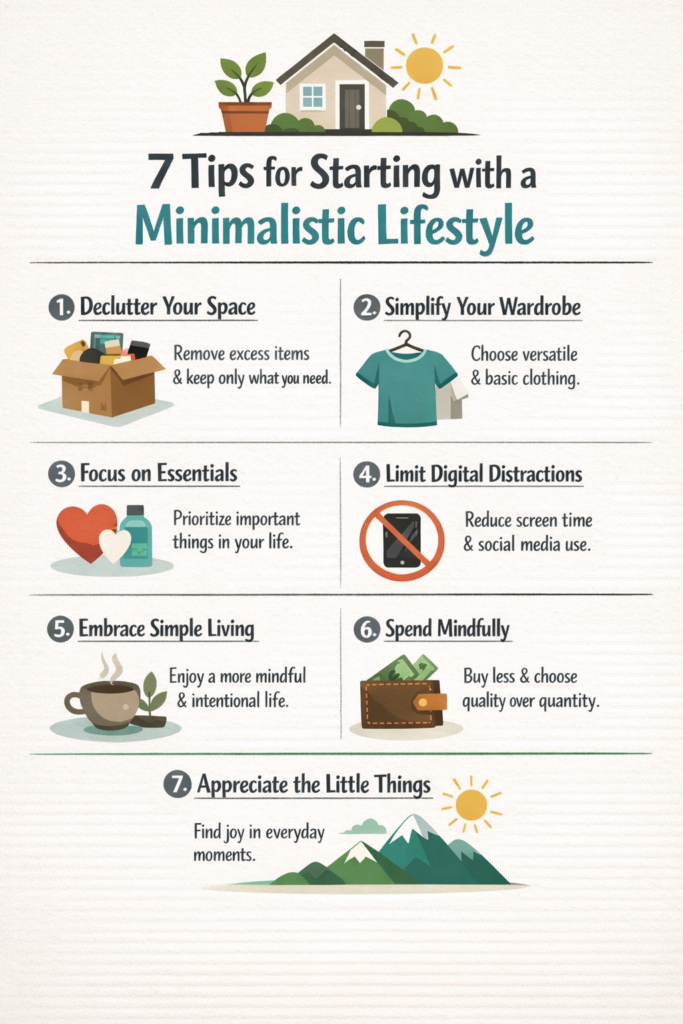
Why People Choose Minimalism
People adopt minimalism because it simplifies life in meaningful ways.
- Reduced mental and physical stress
- Improved focus and productivity
- Better money management
- Easier maintenance and routines
- More time and energy for relationships and growth
Minimalism helps you spend your resources—time, money, and energy more intentionally.
Tips to Get Started With Minimalism
1. Start Small (Avoid Burnout)
Trying to declutter your entire home in one weekend often leads to frustration. Instead, begin with one small area.
Good places to start:
- One drawer
- Your work desk
- Your phone home screen
- Your wallet or bag
Trick: Set a 15-minute timer. Stop when the timer ends, even if you are not done.
2. Do a Value Test
For each item or commitment, ask yourself:
- Do I use this regularly?
- Does this add value or joy to my life?
- Would I choose this again today?
If the answer is no, it may be time to let it go.
Tip: If you feel guilty discarding something, donate it so it continues to add value elsewhere.
3. Reduce Before You Organize
Organizing clutter only hides the problem. Minimalism works best when you reduce first.
Trick: If you remove 30–40% of items, organization often becomes effortless without buying storage boxes.
4. Create Simple Personal Rules
Rules reduce decision fatigue and help maintain minimalism long-term.
Useful rules include:
- One-in, one-out rule
- 30-day wait before non-essential purchases
- No duplicate items unless necessary
Tip: Make rules realistic. Minimalism should support your life, not restrict it.
5. Practice Digital Minimalism
Digital clutter can be more exhausting than physical clutter.
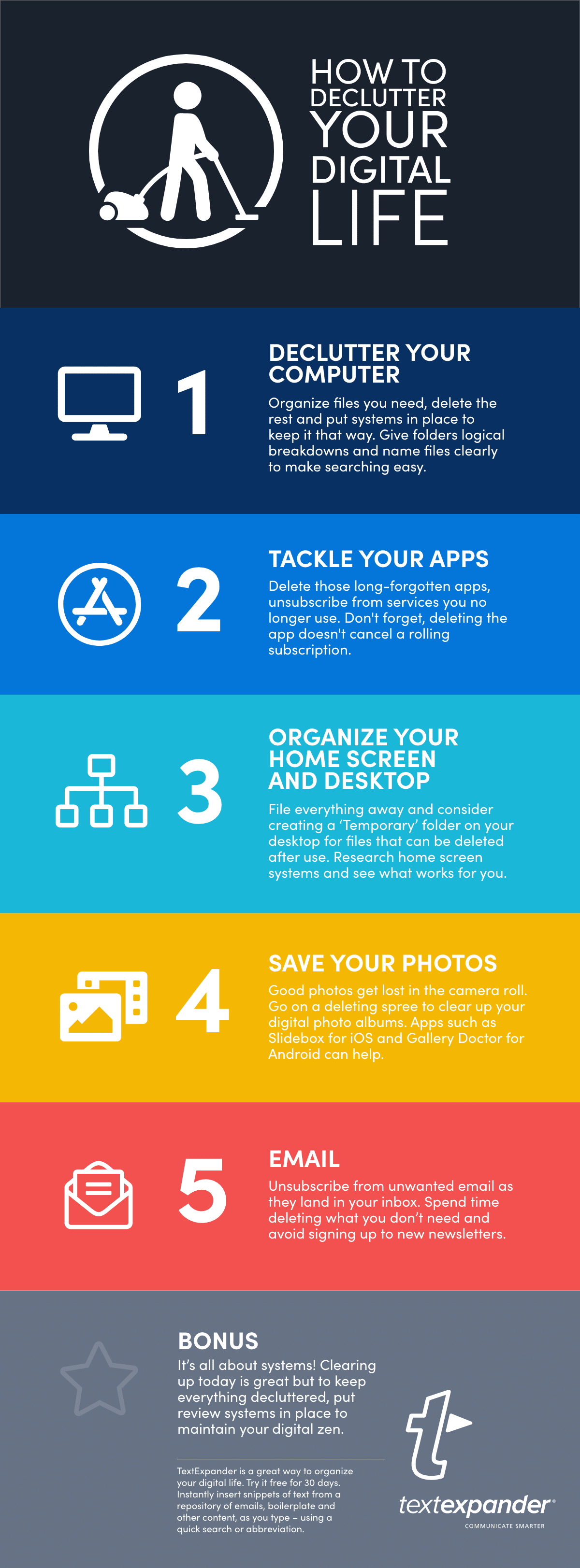
6. Quick digital declutter tips:
- Unsubscribe from emails you don’t read
- Delete unused apps
- Turn off non-essential notifications
- Check messages at scheduled times
Trick: Keep only essential apps on your home screen; move the rest to folders.
7. Simplify Your Time and Commitments
Minimalism is not just about possessions it also applies to your calendar. Follow the tips below to aply minimalism in time maintenance.
- Say no to low-value commitments
- Reduce unnecessary meetings
- Block focused work hours
- Leave buffer time between tasks

Doing fewer things well is more powerful than doing many things poorly.
8. Choose Quality Over Quantity
When you do decide to buy something, choose items that are durable, versatile, and well-made.
Trick: Ask, “Will this still be useful a year from now?” If not, reconsider.
9. Common Minimalism Myths
Minimalism does not mean living in an empty white room. It can be warm, colorful, and personal.
You do not need to get rid of everything—only what no longer aligns with your life today.
Minimalism is not only about stuff; it also simplifies thoughts, habits, and priorities.
A Simple 7-Day Minimalism Starter Plan
- Day 1: Declutter your phone
- Day 2: Clean your wallet or bag
- Day 3: Simplify your desk or workspace
- Day 4: Declutter clothes (start with tops)
- Day 5: Clear kitchen counters
- Day 6: Review and simplify your calendar
- Day 7: Reflect and create personal rules
Conclusion
Minimalism is not about having less—it is about living with intention. By removing excess, you gain clarity, focus, and freedom. Whether applied to your home, work, or mindset, minimalism helps you design a life aligned with what truly matters.