We all have the same 24 hours in a day yet some people consistently deliver high impact work while others remain busy but unproductive. The difference is not effort, it’s prioritization.
Most task-management systems focus only on urgency or importance. But in real life, tasks consume more than time they also drain money and energy. Ignoring these factors leads to burnout, missed opportunities, and poor decisions.
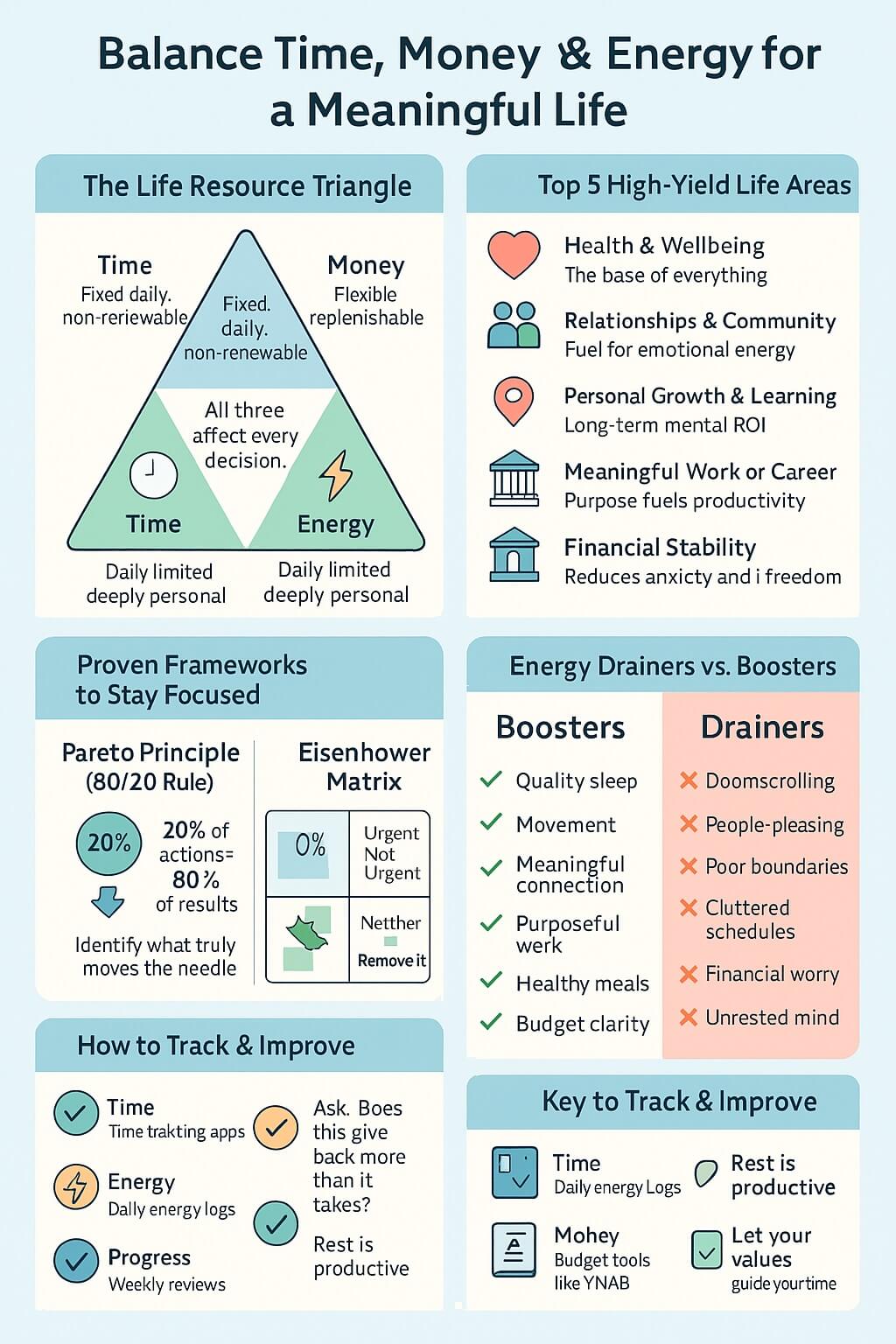
That’s where the Time+Money+Energy (TME) Method comes in.
What Is the Time+Money+Energy (TME) Method?
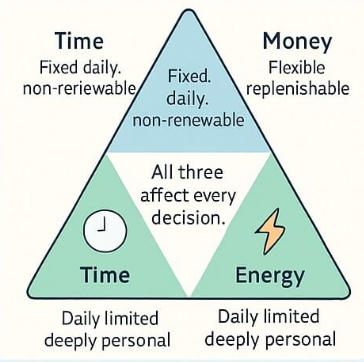
The TME Method is a practical framework to prioritize tasks by evaluating them across three real-world constraints:
- Time – How long will it take?
- Money – What does it cost or earn?
- Energy – How mentally or emotionally demanding is it?
By balancing all three, you focus on maximum impact with minimum waste.

The Three Parameters Explained
1️⃣ Time: The Fixed Resource
Time is non-renewable. Every task competes for it.
Ask yourself:
- How long will this task realistically take?
- Does it block other high-value work?
- Is it urgent or can it be scheduled later?
Key insight:
Short tasks with high impact deserve priority—even if they don’t feel urgent.
2️⃣ Money: The Value Multiplier
Money isn’t just about spending it includes opportunity cost, savings, and future gains.
Ask yourself:
- Does this task generate revenue or savings?
- What happens financially if I delay or ignore it?
- Is this a task I can delegate or automate?
Key insight:
If a task costs you more money when delayed, it deserves immediate attention.
3️⃣ Energy: The Invisible Constraint
Energy is often ignored but it’s the real bottleneck for knowledge workers.
Ask yourself:
- Does this task require deep focus or creativity?
- Am I mentally fresh enough to do it well?
- Will this task drain or boost my motivation?
Key insight:
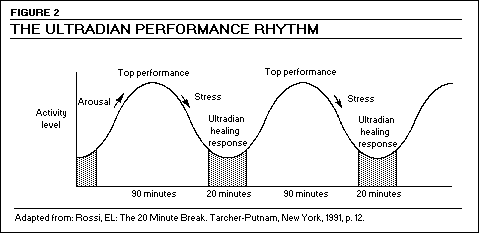
High-energy tasks should align with your peak energy hours—not your free time.

How to Use the TME Method (Step-by-Step)
Step 1: List All Tasks
Write down everything you need to do—no filtering yet.
Step 2: Score Each Task
Rate every task on a scale of 1–5 for each parameter:
| Task | Time (T) | Money (M) | Energy (E) |
|---|---|---|---|
| Prepare client proposal | 4 | 5 | 4 |
| Reply to emails | 2 | 1 | 2 |
| Learn new skill | 3 | 4 | 5 |
Step 3: Interpret the Scores
Instead of total score alone, observe patterns:
- High Money + Low Time → Do first
- High Energy + High Value → Schedule in peak hours
- Low Money + High Time → Delegate or eliminate
- High Energy + Low Value → Limit or batch
The TME Priority Matrix
You can visually group tasks into four categories:
Why This Method Works Better Than Traditional To-Do Lists
✔ Reflects real-world constraints
✔ Prevents burnout
✔ Improves financial decision-making
✔ Aligns work with energy cycles
✔ Encourages intentional trade-offs
You stop asking “What should I do next?”
And start asking “What’s worth my time, money, and energy?”
Final Thought: Productivity Is Resource Management
True productivity isn’t about doing more it’s about spending your limited resources wisely.
When you evaluate tasks through Time, Money, and Energy, your priorities become clearer, your decisions faster, and your work more meaningful.
Try the TME Method for one week and watch your productivity transform.