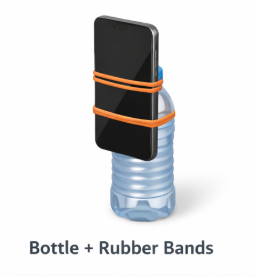
1. Rubber Band + Bottle (Fastest)
Best for: Desk videos, quick shots
What you need:
- Plastic bottle
- 2–3 rubber bands
Steps:
- Place the phone vertically against the bottle.
- Wrap rubber bands tightly around the bottle and phone.
- Adjust angle by slightly tilting the bottle.
Pro: Very quick
Cons: Limited angle control
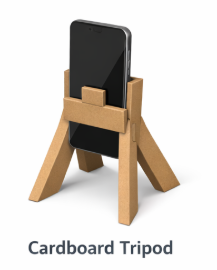
2. Cardboard Tripod (Surprisingly Stable)
Best for: Tabletop filming
What you need:
- Thick cardboard
- Scissors / cutter
- Tape or glue
Steps:
- Cut three equal strips for legs.
- Tape or glue them in a tripod shape.
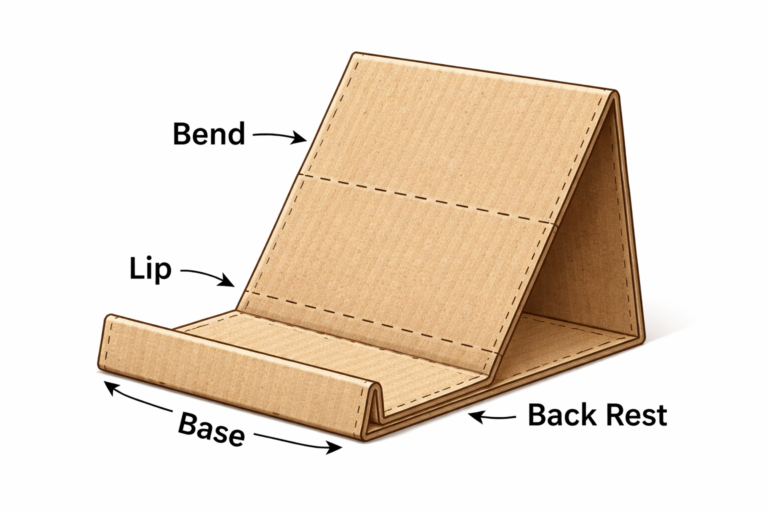
- Cut a small slot or make a clamp using folded cardboard.
- Secure the phone upright.
Pro: Lightweight
Cons: Not waterproof
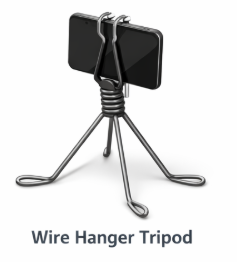
3. Wire Hanger Tripod (Most Flexible)
Best for: Adjustable angles
What you need:
- Metal wire hanger
- Pliers (optional)
Steps:
- Straighten the hanger.
- Bend it into three legs at the bottom.
- Create a spring clamp at the top to hold the phone.
- Adjust legs for height and stability.
Pro: Flexible and reusable
Cons: Needs careful bending
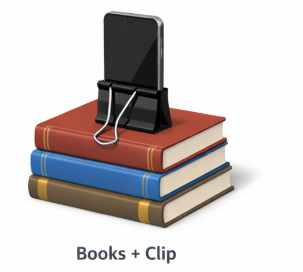
4. Books + Clip (Most Stable Indoors)
Best for: Video calls, online meetings
What you need:
- Stack of books
- Binder clip or clothespin
Steps:
- Stack books to desired height.
- Attach clip to the top book.
- Place phone in the clip.
Pro: Very stable
Cons: Not portable
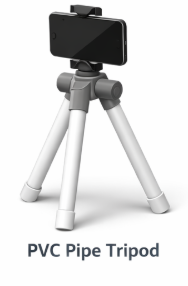
5. PVC Pipe Tripod
Best for: Regular content creation
What you need:
- 3 PVC pipes (same length)
- PVC T-joint
- Rubber bands or phone clamp
Steps:
- Insert pipes into the T-joint as legs.
- Attach a phone clamp on top.
- Adjust leg spread for stability.
Pro: Strong and durable
Cons: Takes time to build