Every office is a small ecosystem of personalities, work styles, and motivations. Some colleagues energize you, others test your patience—but all of them shape your professional experience. Knowing who you’re working with and how to respond can dramatically improve collaboration, reduce stress, and accelerate career growth.
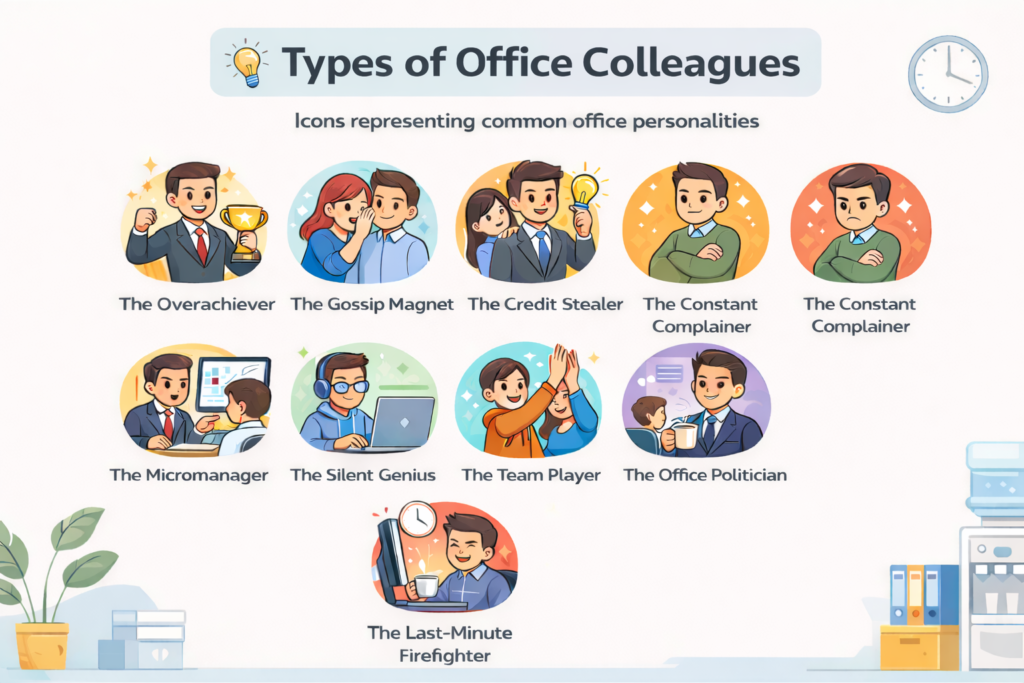
Below are 10 common types of office colleagues, along with practical tips, tricks, and visual infographics to help you navigate them smartly.
1. The Overachiever

Who they are
Always early, always delivering more than expected, and often setting the bar very high.
How to deal with them
Respect their drive without comparing yourself.
Tips & Tricks
- Learn their productivity habits instead of matching their workload
- Set realistic expectations for yourself
- Collaborate rather than compete
2. The Gossip Magnet
Who they are
Knows every rumor before it becomes official news.
How to deal with them
Be friendly but careful.
Tips & Tricks
- Avoid sharing personal or sensitive information
- Redirect conversations to work-related topics
- Build credibility through professionalism, not gossip
3. The Credit Stealer

Who they are
Quick to claim success, slow to acknowledge others’ contributions.
How to deal with them
Make your work visible without sounding defensive.
Tips & Tricks
- Document your contributions clearly
- Share progress updates with stakeholders
- Speak confidently about your work in meetings
4. The Constant Complainer
Who they are
Always dissatisfied—about workload, management, or office policies.
How to deal with them
Listen briefly, then disengage emotionally.
Tips & Tricks
- Acknowledge their feelings without agreeing
- Gently move conversations toward solutions
- Protect your own mindset and motivation
5. The Micromanager

Who they are
Needs frequent updates and wants control over every detail.
How to deal with them
Reduce their anxiety through proactive communication.
Tips & Tricks
- Share regular status updates
- Clarify expectations and outcomes early
- Build trust through consistent delivery
6. The Silent Genius

Who they are
Highly capable but prefers to stay quiet and work independently.
How to deal with them
Create space for their ideas to surface.
Tips & Tricks
- Encourage written or one-on-one inputs
- Give them credit publicly when appropriate
- Don’t confuse silence with disengagement
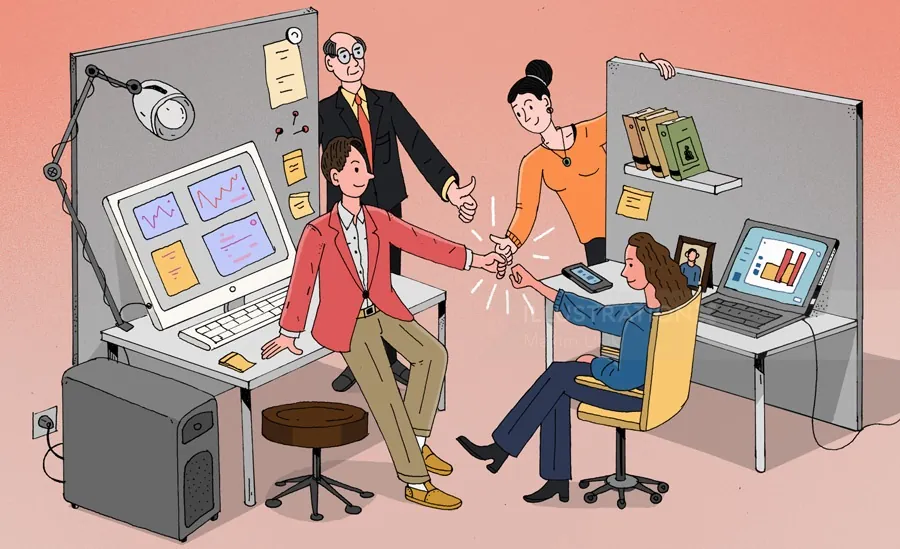
7. The Team Player
Who they are
Supportive, reliable, and focused on collective success.
How to deal with them
Value and protect them.
Tips & Tricks
- Express appreciation openly
- Ensure workload is fairly distributed
- Learn collaboration and empathy from them
8. The Office Politician

Who they are
Highly strategic and well aware of power dynamics.
How to deal with them
Stay neutral and results-oriented.
Tips & Tricks
- Avoid getting pulled into sides or conflicts
- Communicate using facts and outcomes
- Maintain professional boundaries
9. The Last-Minute Firefighter
Who they are
Thrives in urgency and often works just before deadlines.
How to deal with them
Create buffers around your own work.
Tips & Tricks
- Lock timelines in writing
- Follow up well before deadlines
- Don’t inherit their panic as your responsibility
10. The Know-It-All

Who they are
Has strong opinions and loves correcting others.
How to deal with them
Stay calm, confident, and factual.
Tips & Tricks
- Ask data-driven questions
- Acknowledge valid inputs without surrendering your view
- Let results, not arguments, prove your point
Universal Tips for Handling Any Office Personality
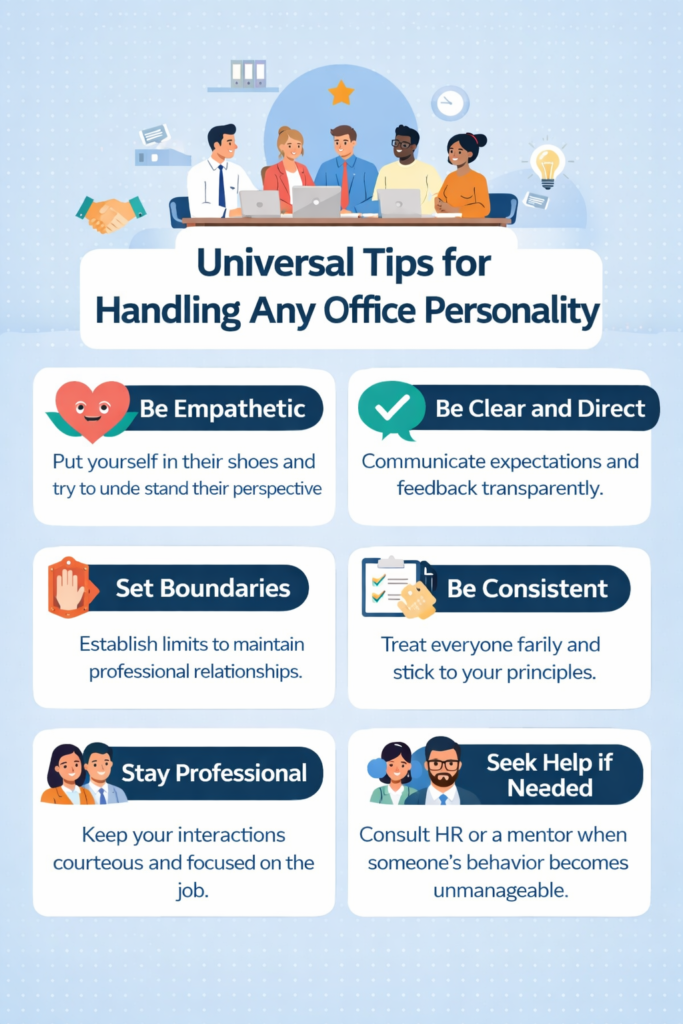
- Practice emotional intelligence: respond thoughtfully, not emotionally
- Set clear boundaries early
- Communicate openly and consistently
- Focus on shared goals over personal differences
- Adapt your style without losing authenticity
Final Thoughts
You may not have control over who you work with, but you always have control over how you respond. Understanding different types of office colleagues helps you turn daily interactions into opportunities for learning, influence, and leadership.
In the long run, professional success depends not only on technical skills, but on how effectively you work with people